
Watershed Protection in Action
Protecting Lake Winnisquam: The Watershed-Based Plan
Lake Winnisquam remains a high-quality lake, but is increasingly affected by sediment and nutrient loading from the surrounding watershed. Sediment carries phosphorus—a key nutrient that can fuel excessive plant and algae growth and contribute to cyanobacteria blooms, which have increased in recent years.
To address these challenges, the Lake Winnisquam Watershed-Based Plan was completed in July 2022. The plan provides a long-term roadmap for protecting water quality and identifies more than 100 sources of non-point pollution across the watershed.
Primary phosphorus sources include:
Unpaved road and ditch erosion
Waterfront park and beach erosion
Shoreline buffer clearing
Untreated urban stormwater runoff
Key recommendations include:
Structural Best Management Practices (BMPs) at priority sites
Long-term water quality monitoring
Expanded education and outreach
Stronger local ordinances
Improved municipal road maintenance practices
Stream restoration
Land conservation and protection of critical areas
Kaulback Road
The first project to be completed was on unpaved Kaulback Road where the road crosses Black Brook, a tributary to Lake Winnisquam. There are two sets of double-barreled culverts that conduct the brook under the road. The culverts are located in a low spot in the road where there’s significant erosion on both sides that was directing sediment into the brook. The plan included sediment traps and stormwater diversions to upland areas on each side of the road on either side of the culverts. The existing sediment traps on the northerly side of the culverts were also upgraded. The work was completed by the Sanbornton Highway Department.
Kaulback Road with sediment runoff heading to Black Brook
Kaulback Road after, with sediment trap in place
Deer Park Association Beach
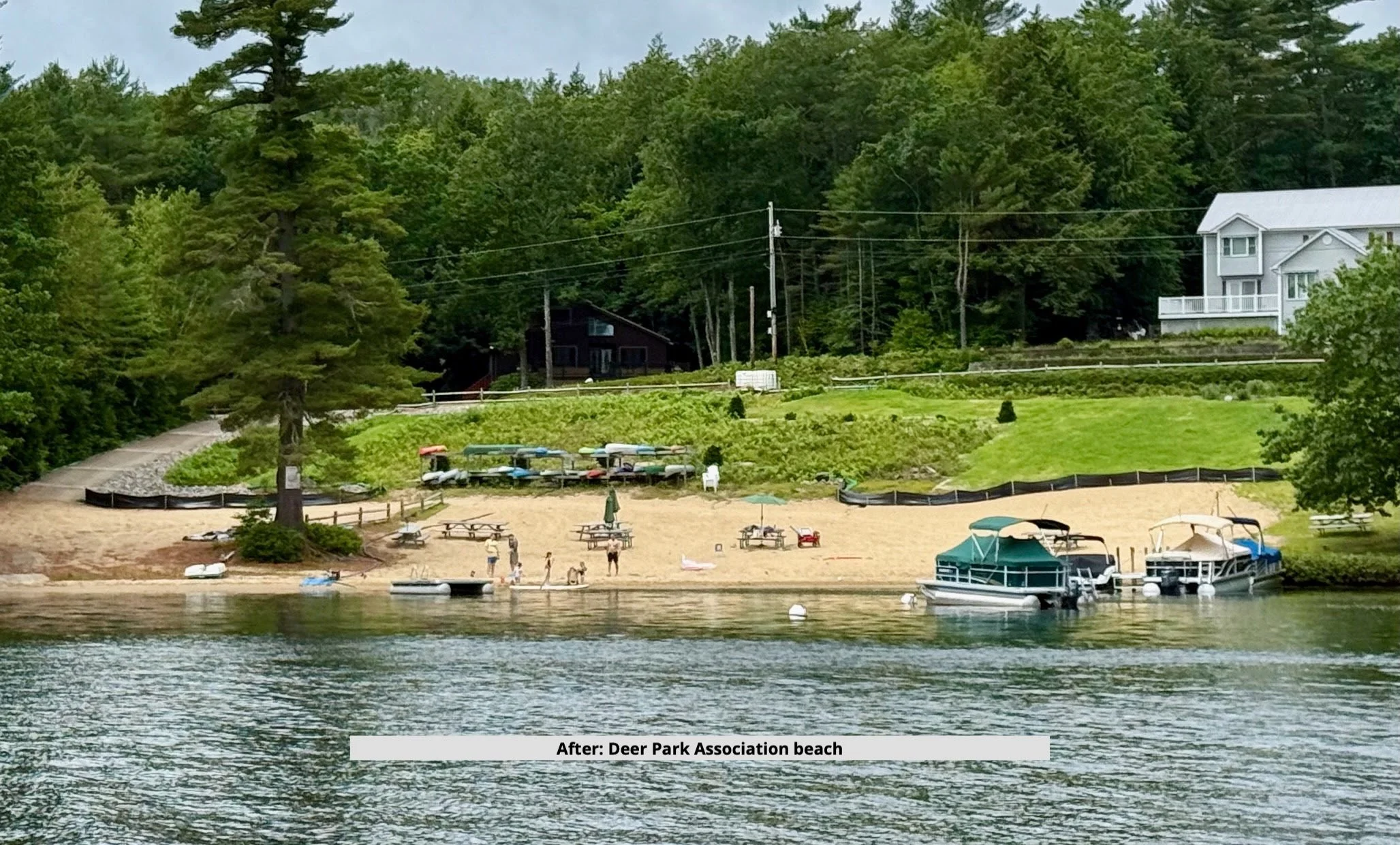
Elements of the Deer Park Beach design included a sediment forebay adjacent to the top of the existing driveway, a stone-lined drainage swale along the north side of the driveway, multiple water bars on the driveway to help direct stormwater into the swale, terminating in a bioretention/infiltration basin to manage and treat the runoff. In addition several portions of the eroded slope facing the lake were regraded and revegetated.
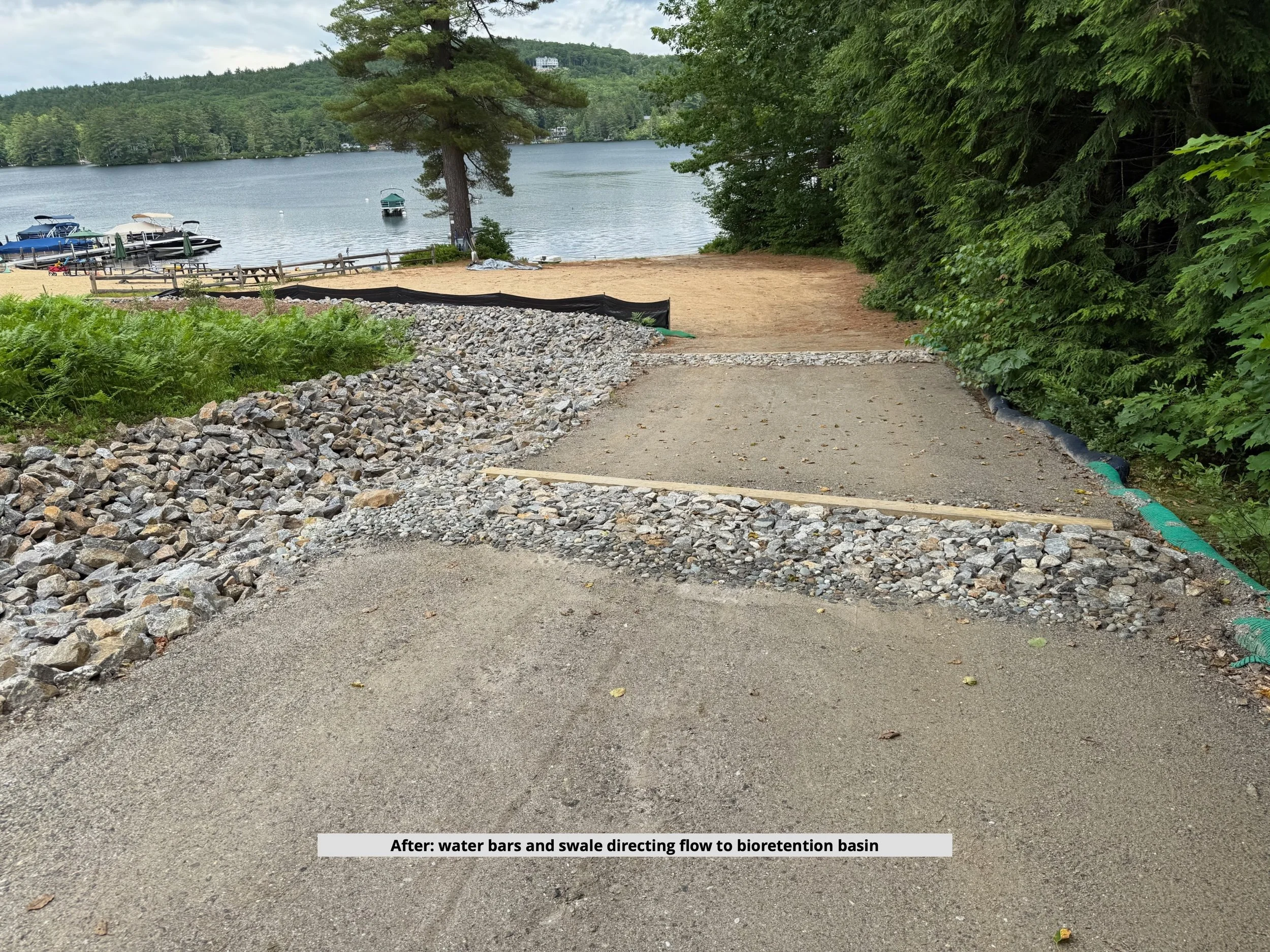
The project was constructed by Total Grounds Landscaping Inc. The residents of the Deer Park Association provided labor for the planting and ongoing maintenance, and purchased a storage tank and pump for watering the new vegetation as part of the required matching funds for the EPA Sec. 319 Watershed Assistance Program grant. The project was completed in mid-July 2025.
Gale Avenue Park
Gale Avenue Park is owned by the City of Laconia and managed by the Recreation Department. The site receives a good deal of roadway runoff that had created two eroded channels on the site and was an ongoing source of sediment and phosphorus loading to the lake. The project included a new sediment forebay, biofiltration basin (aka rain garden), gravel-lined overflow channel, and a vegetated swale.
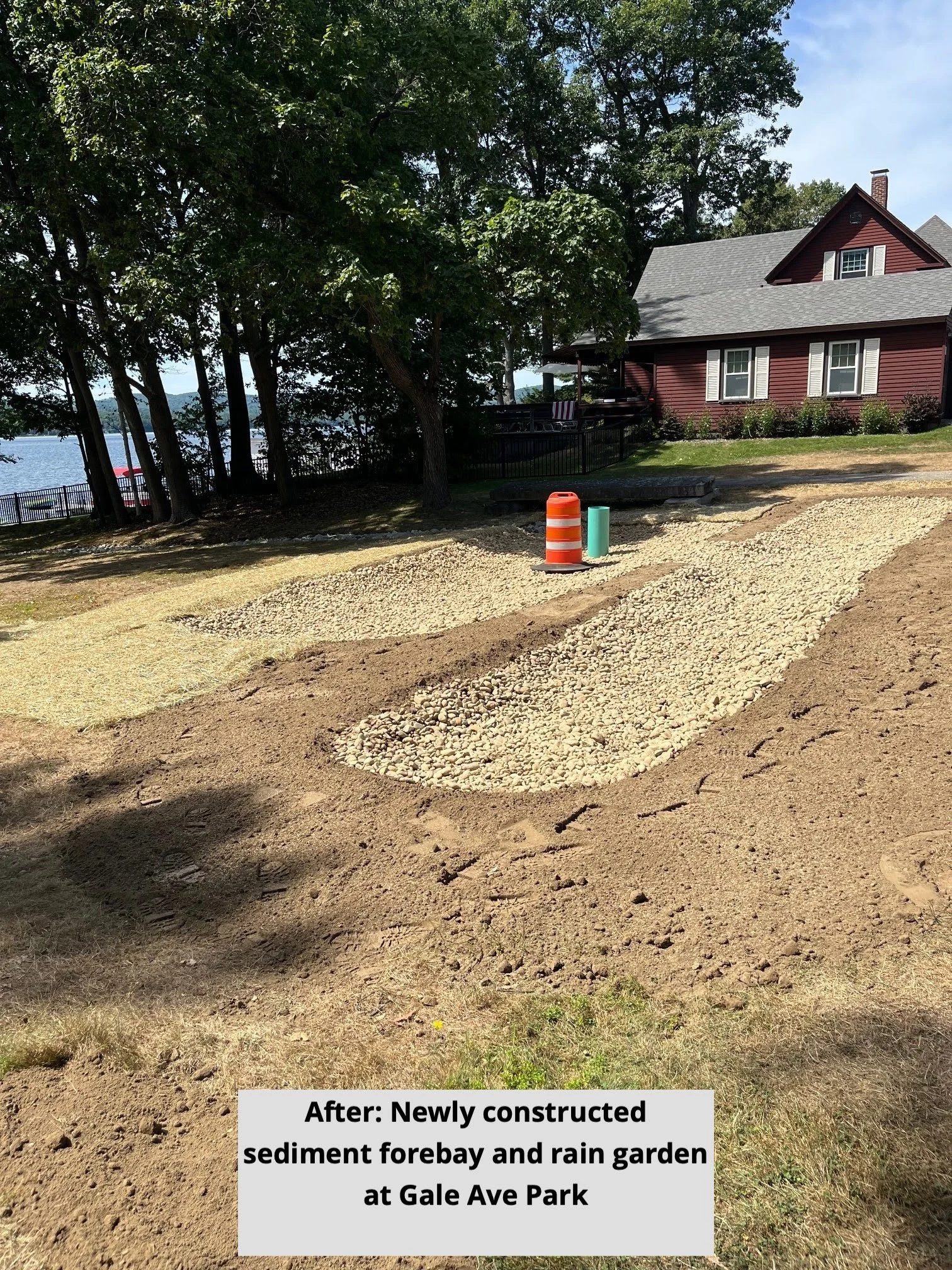
The Laconia DPW and Recreation Department did the construction, and the Conservation Commission planted and maintains the rain garden.
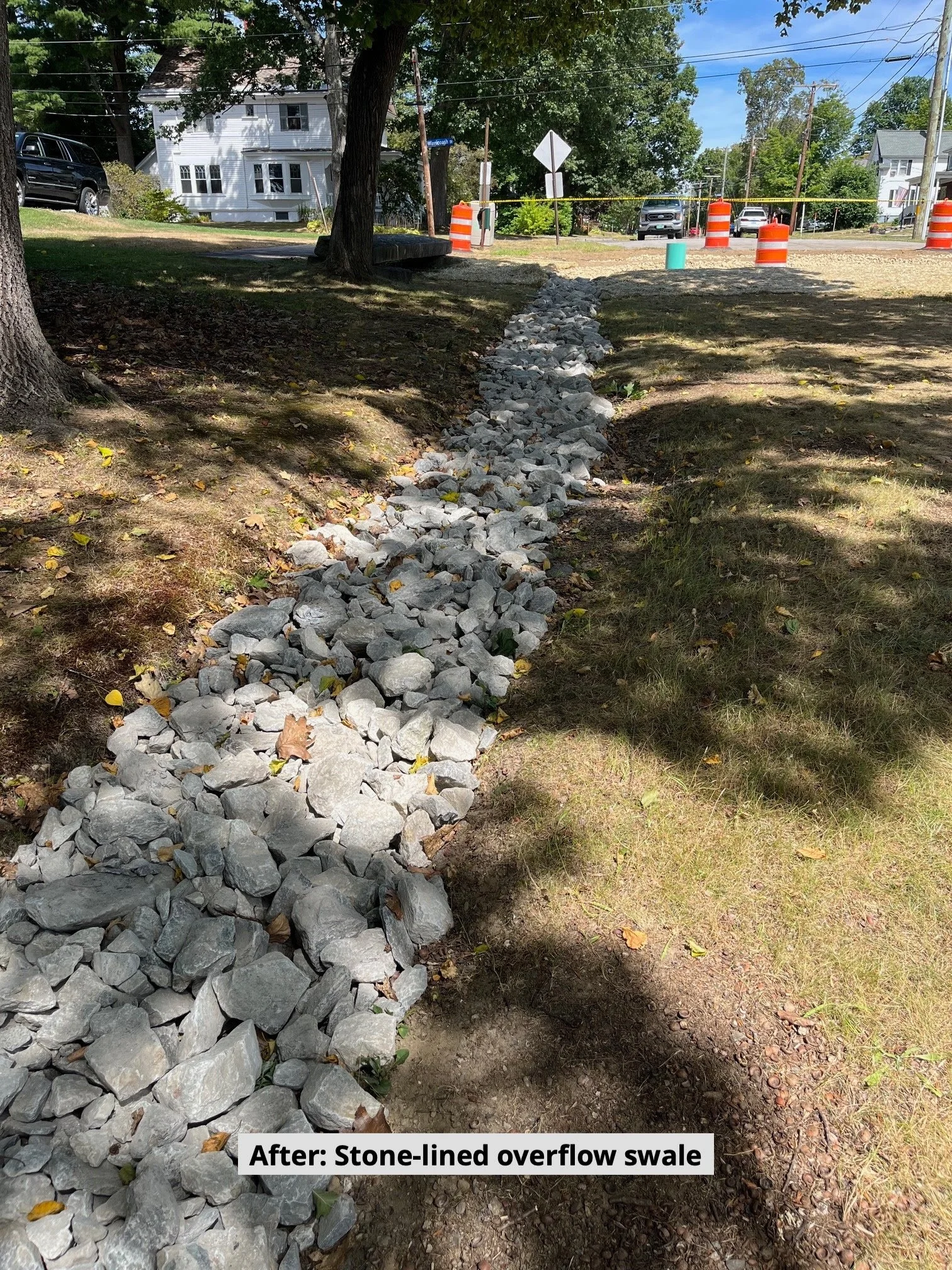
Although Winnisquam has excellent water quality it does, like other lakes in the region, face challenges. 2025 was the forth year in a row the lake experienced documented blooms of potentially harmful cyanobacteria. Harmful algae blooms are caused in part by excess nutrients, particularly phosphorus, in the water. The lake also continued to experience higher than normal temperatures, reaching over 80 degrees in many locations. The Lake Winnisquam Watershed Based Plan identified over 100 sites in the watershed that are sources of non-point pollution and outlined measures to be undertaken to reduce phosphorus loading and protect the water quality of the lake into the future. These 3 projects were the first steps in the implementation of the plan.
The projects underscore not only the importance of addressing stormwater pollution, but also the power of strong partnerships. Local governments, homeowner associations, engineers, contractors, volunteers and WWN each brought their expertise and resources to the table. By working together, we accomplished far more than any one group could on its own—making meaningful progress in protecting Lake Winnisquam for generations to come.
For information on what you can do to help, please visit NH Lakes LakeSmart Tips for Lake Friendly Living.
For more information: