Continuous Monitoring Buoys
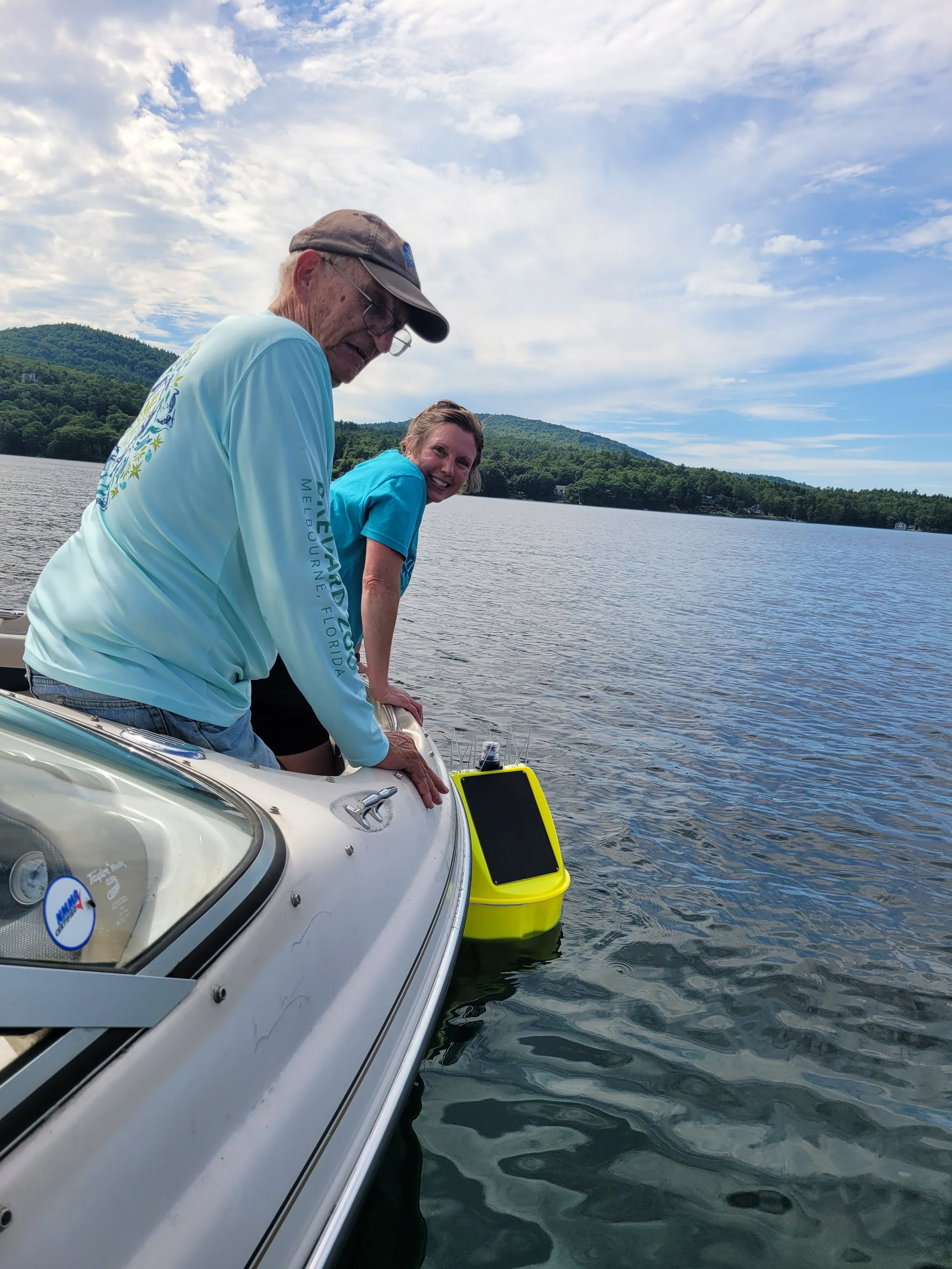

Continuous Water Monitoring on Lake Winnisquam
Seeing Lake Winnisquam in Real Time
Lake Winnisquam is a dynamic ecosystem, and conditions can change quickly. To better understand those changes, the Winnisquam Watershed Network (WWN) has launched a new pilot project with Subtidal to continuously monitor water conditions at two locations on the lake.
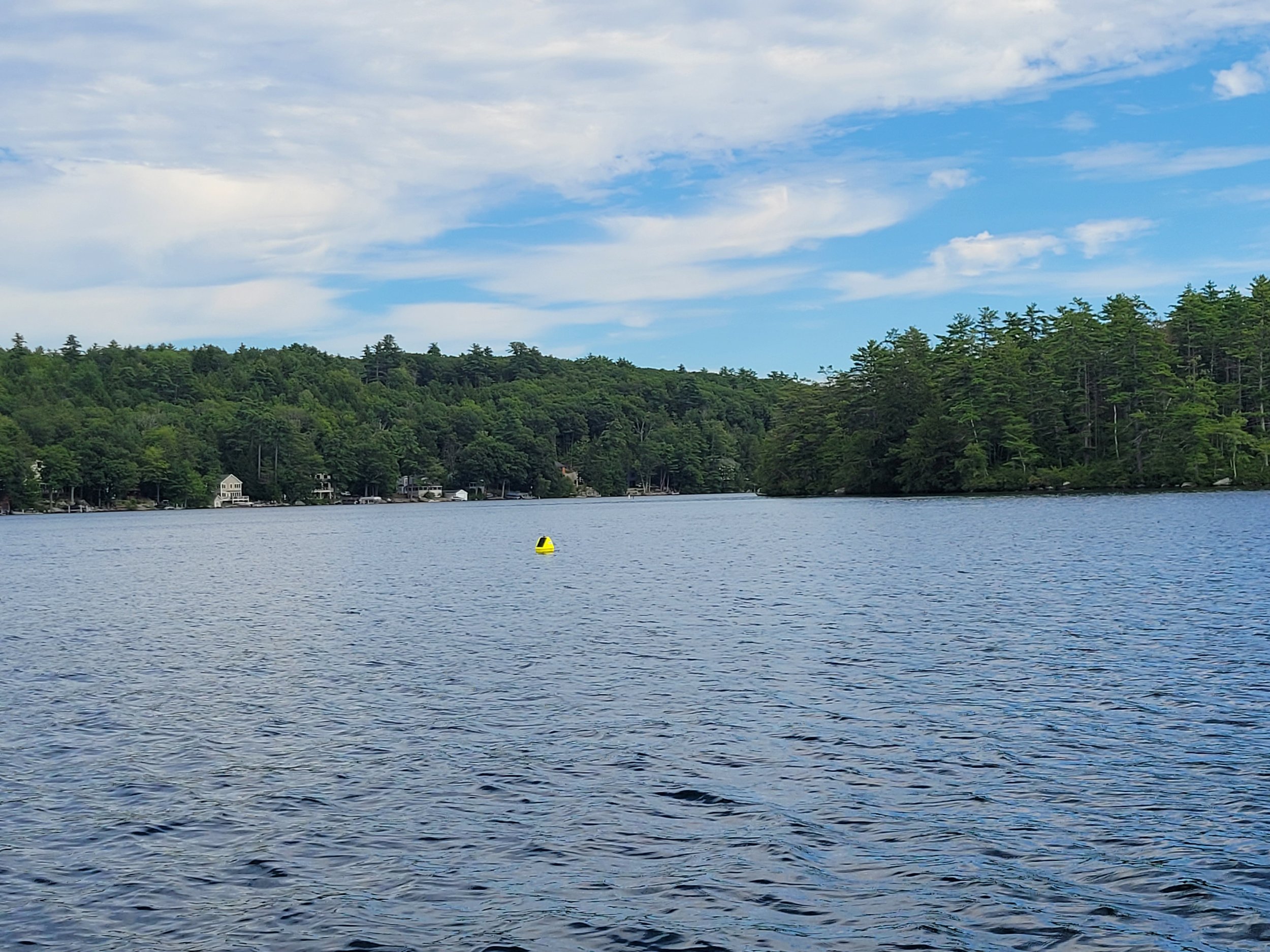
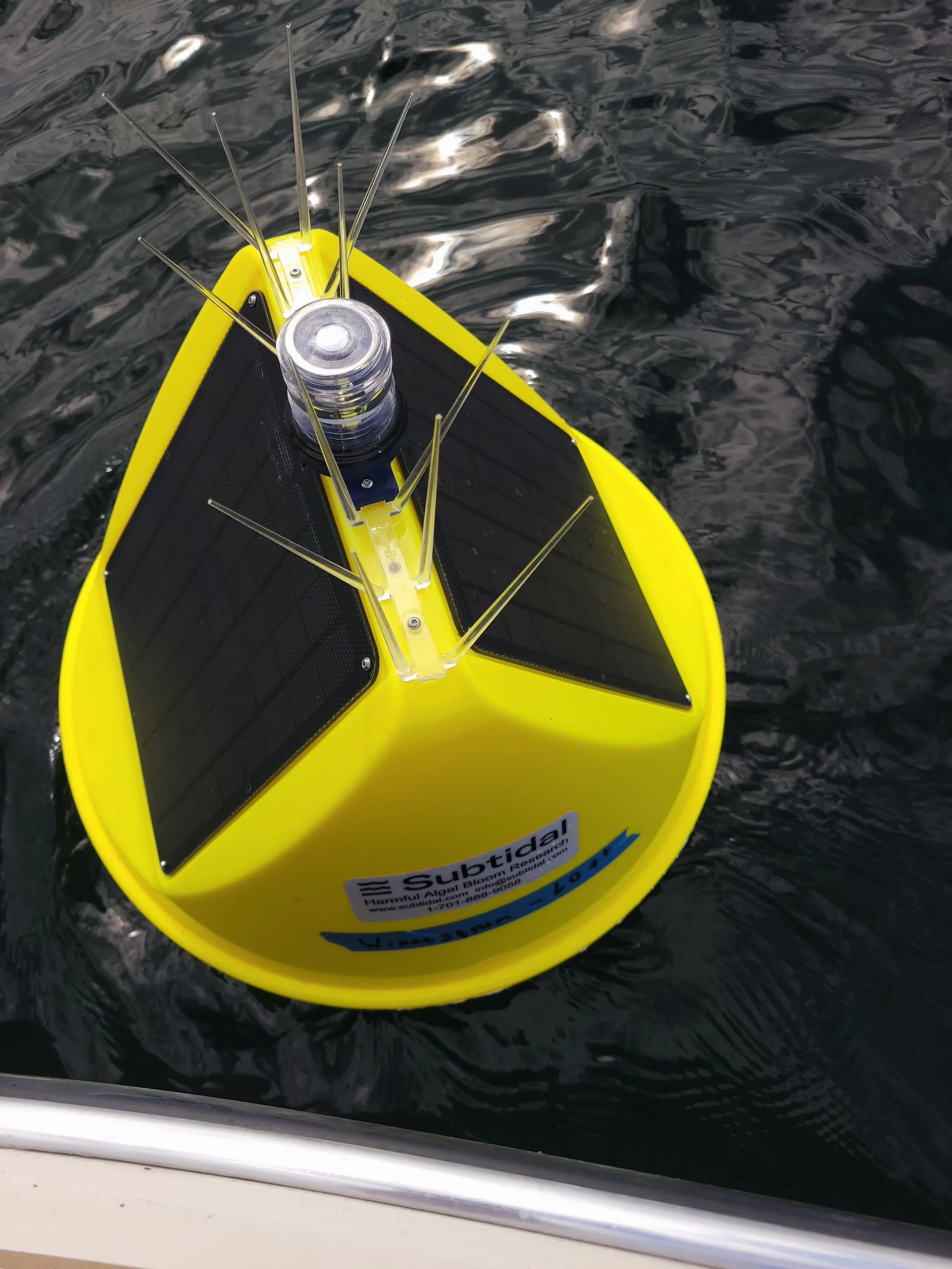
In August 2026, WWN staff and volunteers deployed two solar-powered, continuous water monitoring buoys, one just north of Three Islands and another south of Mohawk Island.
Unlike traditional water quality sampling, which provides a snapshot of conditions at a particular time, these buoys collect data around the clock and at multiple depths in the water column. This gives WWN an unprecedented opportunity to see how conditions change over time and throughout the lake.
What Are the Buoys Monitoring?
Each buoy is equipped with sensors that measure a range of water quality and environmental conditions, including:
Phycocyanin: a pigment associated with cyanobacteria
Chlorophyll-a: a photosynthetic pigment associated with algae
Water temperature
Dissolved oxygen
Wind direction
Together, these measurements help create a more complete picture of
what is happening in Lake Winnisquam.
Understanding Harmful Algal Blooms
One important goal of this pilot project is to better understand the
environmental conditions associated with harmful algal blooms (HABs).
The buoys continuously measure phycocyanin, an indicator of cyanobacteria, along with other environmental factors that may help WWN understand when and under what conditions cyanobacteria may increase.
Important: The buoy data is one component of WWN’s broader monitoring and should be considered alongside other observations and monitoring programs.
Part of a Bigger Picture
The continuous monitoring project is expanding WWN’s existing water quality monitoring. WWN already collects information about Lake Winnisquam through several monitoring efforts, including traditional in-lake water quality sampling, the Plankton Patrol program, and our new Spiny Water Flea monitoring program.
Plankton Patrol provides information about the microscopic organisms living in the lake, including phytoplankton and zooplankton. These organisms are an important part of the lake’s food web and can provide valuable insight into changing lake conditions.
By combining continuous buoy monitoring, regular water quality monitoring, plankton monitoring, and Spiny Water Flea monitoring WWN can examine Lake Winnisquam from multiple perspectives. From physical and chemical conditions to the microscopic organisms that form the foundation of the lake’s ecosystem.
Why Continuous Monitoring Matters
The more information we have about Lake Winnisquam, the better equipped we are to understand changes and identify emerging issues.
Continuous monitoring can help WWN:
Identify trends in lake conditions
Better understand factors associated with harmful algal blooms
See how conditions change throughout the water column
Complement traditional water quality sampling
Strengthen our understanding of lake health and ecology
Inform future monitoring and watershed protection efforts
Provide the community with additional information about current lake conditions
This project represents an important step forward in WWN’s ability to understand and protect Lake Winnisquam.
How Long Will the Buoys Be Deployed?
The buoys will remain in place through November 2026, allowing WWN and Subtidal to capture changing conditions throughout the fall, including conditions following fall turnover.
The buoys are expected to be redeployed in the spring and continue monitoring into the 2027 season. As the project progresses, WWN will share information and insights gathered from the monitoring project with member of the WWN and lake community.
About Our Partner: Subtidal
WWN is partnering with Subtidal, a Cape Cod-based science team affiliated with the Woods Hole Oceanographic Institution. Subtidal’s buoy technology is supported by the National Oceanic and Atmospheric Administration (NOAA) and the National Science Foundation (NSF).