2026 Current Conditions
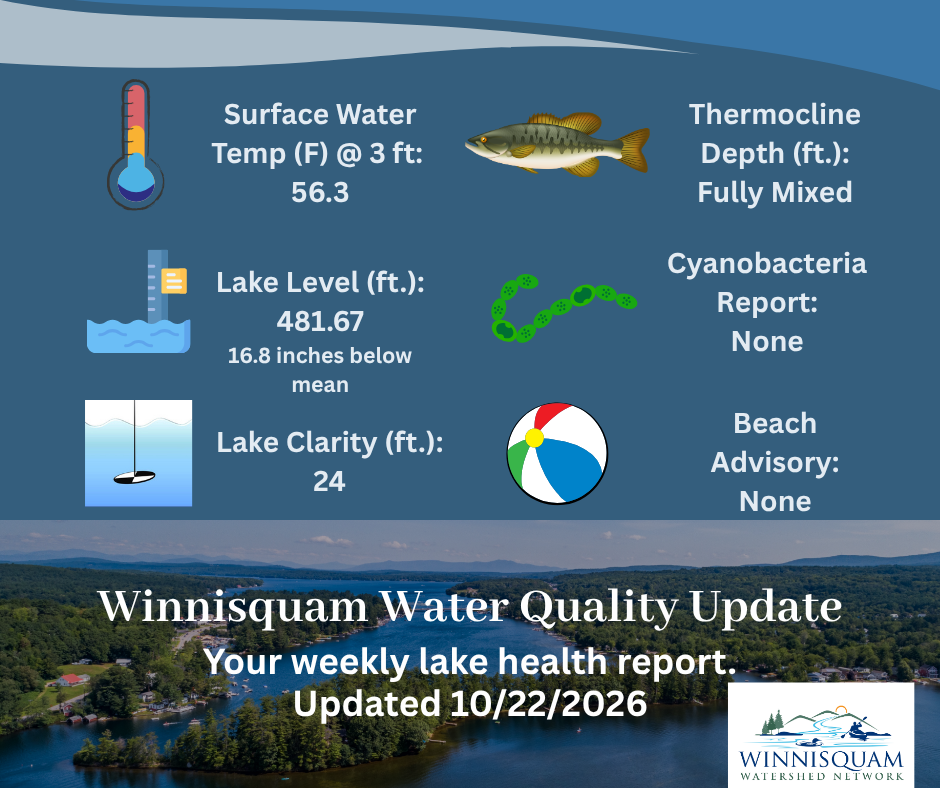
Weekly Water Quality Update 10/22/2026
Fall Turnover is Here!
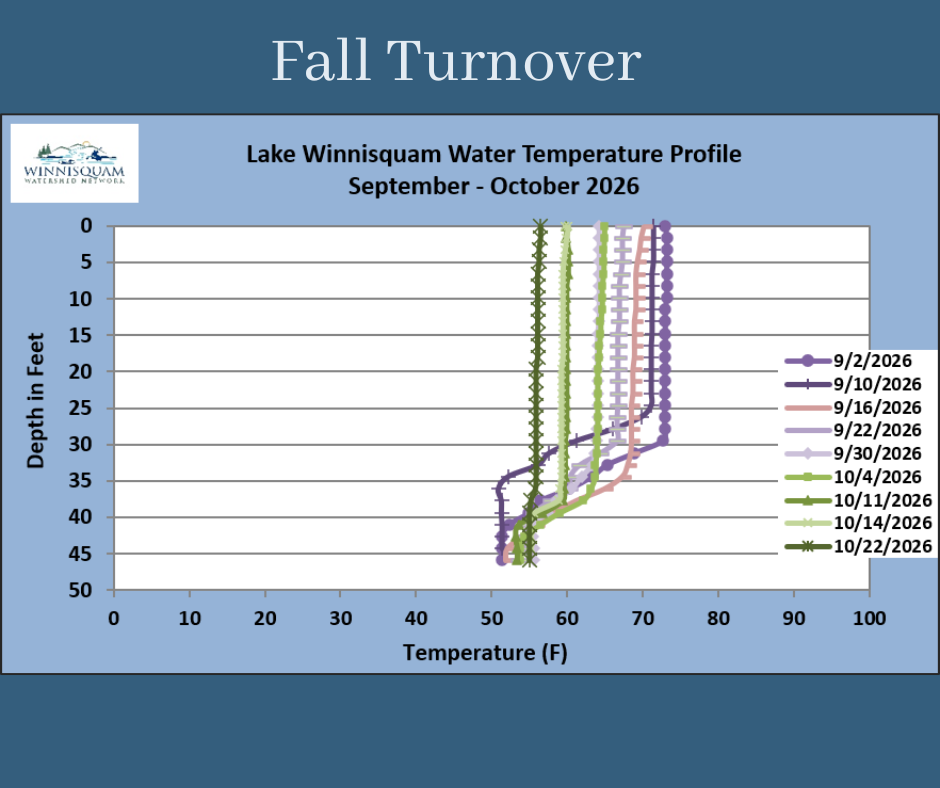
Fall turnover has arrived on Lake Winnisquam! Cooler overnight temperatures and wind conditions helped mix the lake's water column, completing this important seasonal transition. This year's turnover occurred approximately one week later than in 2025.
Fall turnover marks the end of summer stratification, when warmer surface waters and colder bottom waters remain separated. As temperatures cool and wind-driven mixing increases, these layers mix more completely, redistributing heat, dissolved oxygen, and nutrients throughout the water column.
With turnover complete, we are wrapping up our regular weekly water quality monitoring for the season.
What Is Fall Turnover?
During summer, Lake Winnisquam develops distinct temperature layers. Warm water remains near the surface, while colder, denser water stays deeper in the lake. This separation, known as thermal stratification, limits mixing between the upper and lower water layers.
As autumn brings cooler temperatures and increased wind-driven mixing, the surface water cools and the temperature difference between surface and bottom waters decreases. Eventually, the lake mixes more completely from top to bottom in a process called fall turnover.
Turnover is an important seasonal transition because it redistributes heat, dissolved oxygen, and nutrients throughout the water column.
Current Lake Conditions
Water clarity remains high and stable, and lake levels have dropped approximately 17 inches during the two-week fall drawdown period.
Our continuous monitoring buoys are helping us track lake conditions and validate the effects of the drawdown.
Continuous Buoy Monitoring
Our continuous monitoring buoys are giving WWN a new level of insight into this seasonal transition. Historically, our regular water quality sampling provided valuable snapshots of lake conditions, but it was difficult to determine precisely when turnover occurred between sampling events.
The buoys continuously measure water temperature at different depths, allowing us to follow the progression toward turnover and identify when the lake begins mixing.
The ability to monitor these changes continuously is an important advancement for WWN's water quality program. These data provide insight into conditions between traditional sampling events and help us better understand seasonal patterns in Lake Winnisquam.
Our buoys will continue collecting data into November, allowing us to follow changing conditions as the lake settles into its winter pattern. We are excited to continue collecting this valuable data and look forward to understanding how conditions change through November. Learn more about our buoys here.
Weekly Water Quality Reports Pausing Until Spring
With fall turnover complete, WWN's regular weekly water quality reports will pause for the season and resume next spring. While our routine weekly monitoring is ending, we will continue reviewing data from our continuous monitoring buoys. If significant changes in water quality occur during the off-season, we'll share relevant updates to keep the community informed.
Thank you to our volunteers, partners, and community members who followed our water quality updates throughout the season. Your interest and participation help us continue our work to protect Lake Winnisquam.
Coming This Winter: WWN Ice Water
We're excited to introduce Ice Watch, a new WWN citizen science project launching this winter! Ice Watch will invite community members to help track ice conditions around Lake Winnisquam. By documenting ice formation, coverage, and changing conditions at different locations, volunteers can help us build a better understanding of winter ice patterns across the lake.
Community observations will complement WWN's ongoing monitoring efforts and provide valuable information about how ice conditions change from year to year. Want to volunteer? We'd love your help! If you're interested in participating in Ice Watch this winter, reach out to WWN to express your interest. We'll share more information about the project, how to participate, and how to submit observations as we approach launch.
Get Involved
If you are interested in becoming involved with water quality monitoring or other volunteer stewardship opportunities, we encourage you to contact WWN. Community volunteers play a vital role in helping preserve and protect Lake Winnisquam and its watershed for future generations.
While these weekly updates often focus on scientific observations, they also remind us why protecting Lake Winnisquam matters. A healthy lake provides countless benefits to our community, from swimming, boating, paddling, and fishing to supporting wildlife, providing clean water, and offering a place to relax, reconnect, and create lasting memories with family and friends.
The continued health of Lake Winnisquam is the result of many people working together. Every lake-friendly action, whether it's cleaning, draining, and drying your boat, reducing runoff from your property, minimizing wake near shorelines, or respecting wildlife, helps preserve this incredible resource for future generations.
Helpful links for current conditions:
For real-time lake level information, visit NHDES' Real-Time Data and Information page
For current advisories, watches, and warnings visit NHDES' Healthy Swimming Mapper.
Stay informed, stay safe, and check your inbox for your weekly water quality updates. Follow us on social media to stay updated on what’s happening around the lake